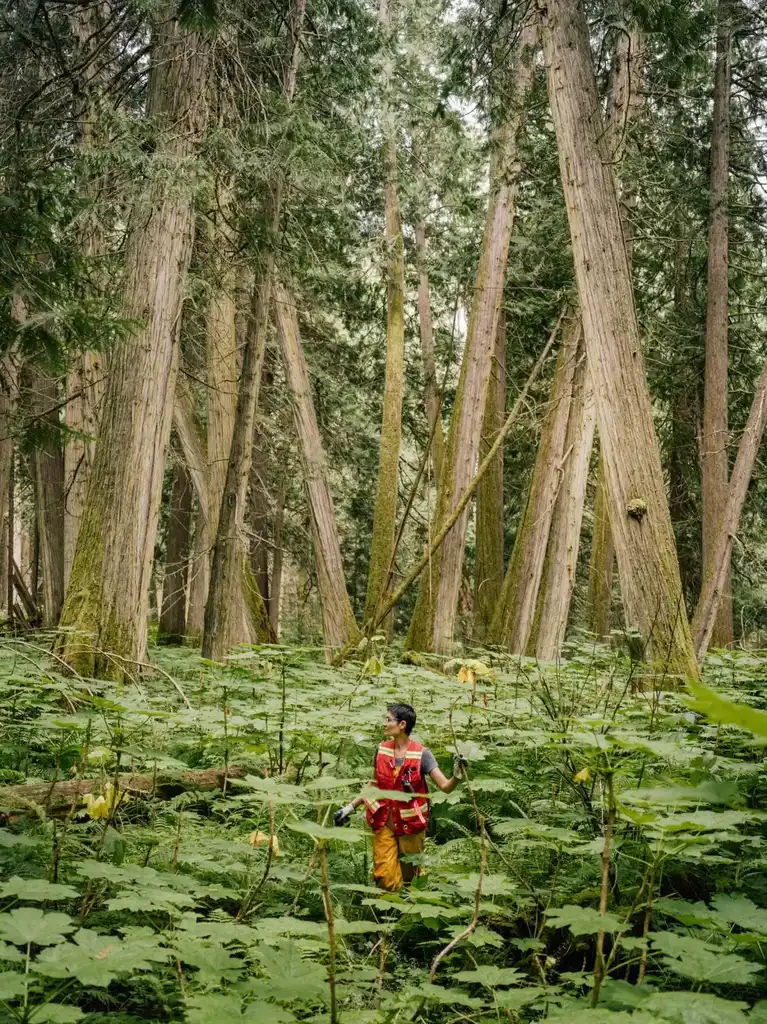
Ecotrust Canada is a charity with heart and roots — working to build resilient, place-based economies in rural, remote, and Indigenous communities in Canada. Its work spans food systems, energy, housing, environmental stewardship, and community governance.
Where It Comes From & What It Stands For
- Founded in 1995 in British Columbia (offices in Vancouver and Prince Rupert), the organization emerged out of the idea that environmental conservation and economic well-being are not enemies — they are partners. It started because people noticed that communities in remote areas (especially Indigenous ones) needed new models. Models where culture, ecology, and economy grow together.
- Its early work was very much about empowerment: giving tools and data back to communities, enabling them to map their lands, tell their own stories, make informed decisions.
How It’s Grown Over Time
Ecotrust Canada has moved through phases of experimentation, learning, scaling:
- Mapping & Information Tools
They helped communities use GIS technology, combining scientific and traditional Indigenous knowledge so people could visualize their lands, resources, and claim their role in planning. - Social Finance & Local Entrepreneurship
They set up a Coastal Loan Fund for small environmental/social businesses. The idea: invest locally, create jobs, generate benefits for people and nature together. - “Safe-fail” Innovation
Instead of huge one-size-fits-all projects, they’ve often trialed projects on a manageable scale: fisheries traceability, alternative forest management, monitoring tech in remote coastal zones, etc. If a project worked (safe to try, low risk), they’d scale it; if not, they learned, adapted. - Priorities Today
Their current focus is sharpened into five big areas:
• Climate Innovation
• Indigenous Homelands
• Community Fisheries
• Food Systems
• Community Energy In practice that means things like: working with youth to build supply chains for housing that are sustainable, culturally relevant, ecologically sound; helping coastal fishing operations that are community-led; helping remote communities get clean, reliable energy; etc.
What Makes Them Stand Out
- Place-based & Community-led: They don’t come in with “top-down solutions.” They work with communities, especially Indigenous ones, valuing local knowledge, culture, connection to land.
- Holistic Lens: For them, “economy” isn’t just financial stuff. It’s how people live, how culture is respected, how nature is protected, how resilience is built. They care about all those dimensions.
- Proving “What’s Possible”: Many of their projects are experimental or pilot-style, but they are designed to show that alternatives to extractive economics can work — and can be scaled.
Challenges & Why It Matters
- Remote or rural geographies often have less access to infrastructure, investment, or policy support. That means change is harder, slower.
- Scaling successful local initiatives isn’t trivial; local conditions (culture, geography, governance) vary a lot, so models don’t always transfer seamlessly.
- Funding and policy environments are always shifting. Demand for sustainable, equitable, and inclusive community development is rising — but aligning government, funding, regulation is complicated.
But despite that, Ecotrust Canada matters. It’s a living example of how sustainability & justice can be intertwined. In a world where climate, inequality, and social fracture are growing, their work offers glimmers of what resilient, grounded communities might look like: communities where people, land, culture, and economy all matter together.